DIGITAL HUB TECH

Learn With Us
Improve With Us

4.9 / 5

4.7 / 5

4.6 / 5

4.6 / 5

Medical Coding

A programming language can be understood in medical-coding terms as a standardized classification system that allows healthcare professionals (humans) to communicate with electronic health systems (computers). Just like ICD or CPT codes define diagnoses, procedures, and services in a structured way, a programming language defines logic, structure, and functionality in a structured syntax. This enables the accurate development, recording, and execution of healthcare software, applications, and clinical information systems.

Medical Coding Job-Oriented and Certification Training Program

Master Medical Coding in Just 60 Days!
Build a strong foundation in healthcare coding by mastering the most widely used classification systems (ICD-10, CPT, HCPCS) through real-world medical cases and hands-on coding projects.

Pathway to Mastering Medical Coding

  • Foundational Knowledge : Start with the basics of medical terminology, anatomy & physiology, and disease processes. Build problem-solving skills with coding guidelines, case-based practice, and code selection flowcharts. Strengthen your foundation in ICD-10-CM structure, CPT-4 format, and HCPCS Level II usage.
  • Core Coding Systems : 
    ICD-10-CM: Learn diagnosis coding and proper documentation linkage.
    CPT-4: Master procedure coding including E/M services, surgeries, and radiology.
    HCPCS Level II: Understand supply, drug, and service codes used in billing.
    Gain insight into DRG coding for inpatient hospital billing.
  • Tools & Coding Environment : Get hands-on with Encoders, EHR systems, and claim management tools. Learn Medicare/Medicaid billing rules, insurance guidelines, NCCI edits, and claim scrubbing software. Practice audit preparation, compliance checks, and denial management workflows.
  • Real-World Projects : 
    Work on case studies and coding scenarios such as:
    Outpatient visits
    Inpatient surgical procedures
    Radiology & pathology reports
    Emergency department encounters
    Durable medical equipment (DME) billing
  • Advanced Concepts : 
    Dive into modifier usage, sequencing rules, DRG grouping, and risk adjustment coding (HCC). Learn how different payers (Medicare, Medicaid, Private Insurance) handle claims, audits, and compliance. Study coding for telemedicine, critical care, and specialized procedures.

  • Certifications & Career Prep : 

    Consider certifications such as:

    CPC (Certified Professional Coder – AAPC)
    CCA/CCS (AHIMA)
    ICD-10-CM/PCS specialization
    Showcase your skills with coding portfolios, mock audits, and compliance projects. Apply for roles in hospitals, physician offices, insurance companies, and healthcare BPOs.
  • Continuous Learning : 
    Stay updated with ICD-11 developments, payer policy updates, and evolving coding compliance rules. Explore advanced topics like medical auditing, clinical documentation improvement (CDI), risk adjustment (HCC), and global billing practices. Keep practicing through real-time case studies, coding challenges, and audit simulations to sharpen accuracy and efficiency.

Career Outlook & Growth Potential in Medical Coding

  • Job Demand :
    The demand for certified medical coders continues to rise across industries such as hospitals, healthcare BPOs, insurance companies, pharmaceutical firms, and telemedicine providers. Mastery of coding systems like ICD-10-CM, CPT-4, and HCPCS Level II opens doors to diverse career paths ranging from outpatient and inpatient coding to auditing, compliance, and risk adjustment (HCC coding).
  • Compensation :
    Medical coding professionals enjoy highly competitive salaries, with Certified Professional Coders (CPC), Certified Coding Specialists (CCS), and HCC coders among the most sought-after worldwide. Compensation varies by expertise and specialization—coders skilled in inpatient DRG coding, risk adjustment, or auditing often command top-tier packages.
  • Future Trends :

    To stay relevant, medical coding professionals are expected to adapt to emerging trends such as:

    • ICD-11 Integration for global standardization and advanced clinical detail

    • Risk Adjustment (HCC) Coding for value-based care and insurance reimbursements

    • Telemedicine & Remote Coding practices supporting virtual healthcare models

    • AI-Assisted Coding Tools for faster, more accurate claim submission and auditing

    • Compliance & Secure Coding practices to meet HIPAA, payer, and audit requirements

    • Specialty Coding in areas like oncology, cardiology, orthopedics, and radiology gaining traction for accuracy and higher reimbursement.

Essential Skills & Tools

These are the core skills and technologies covered in the Medical Coding Mastery Track to ensure you’re equipped for real-world, production-grade healthcare documentation and reimbursement.

DOMAIN

Skills & Technologies

Coding Systems & Paradigms

ICD-10-CM – Diagnosis coding, sequencing, and guideline application

CPT-4 – Procedure and service coding, surgical packages, E/M coding

HCPCS Level II – Supplies, DME, drugs, and ancillary services

DRG & HCC Coding – Inpatient grouping and risk adjustment for reimbursement

Core Healthcare Concepts

Medical Terminology & Anatomy – Body systems, disease processes, surgical procedures

Coding Guidelines – ICD-10 official guidelines, CPT instructions, payer edits

Compliance & Ethics – HIPAA regulations, audit readiness, fraud prevention

Clinical Documentation Improvement (CDI) – Linking physician documentation with accurate codes

Coding Tools & Environment

Encoders & Code Books: 3M, TruCode, ICD-10 manuals, CPT books

EHR Systems: Epic, Cerner, Meditech

Claim Management Tools: Availity, Optum, Change Healthcare

Auditing & Compliance Tools: AAPC Coder, Claim Scrubbing, Denial Management Systems

Healthcare Data & Connectivity

Electronic Health Records (EHRs) – Navigating physician notes, lab reports, operative reports

Claims & Billing Systems – HCFA-1500, UB-04 claim forms

Insurance & Payer Guidelines – Medicare, Medicaid, private insurance rules

File Handling – Linking lab reports, radiology findings, and operative notes with coded claims

Frameworks & References

ICD-10-CM/PCS Guidelines

CPT Assistant, Coding Clinics, NCCI Edits

Risk Adjustment Models (HCC, RAF scores)

Medicare & Payer Policy Manuals

Security & Best Practices

HIPAA Compliance – Protected Health Information (PHI) safeguards

Error Prevention – Accurate code selection, documentation verification

Secure Claims Submission – Encryption protocols for EDI transactions

Audit Preparation – Following payer-specific compliance requirements

System Design & Process Flow

Medical Billing Lifecycle – Patient visit → Documentation → Coding → Billing → Payment

Revenue Cycle Management (RCM) – Ensuring claims are clean and paid on time

Appeals & Denial Handling – Correcting and resubmitting rejected claims

Global Coding Practices – ICD-11 adoption and international billing compliance

Soft Skills

Analytical Thinking – Abstracting correct diagnosis/procedure codes from complex charts

Attention to Detail – Avoiding errors in modifiers, sequencing, and bundling

Clear Documentation – Writing audit-ready coding notes

Collaboration – Working with physicians, auditors, and billing teams under Agile/RCM workflows

Training Pattern Details

  • Industry-Aligned Curriculum:

    Get trained through a structured Medical Coding curriculum, covering ICD-10-CM, CPT-4, and HCPCS with foundational principles, advanced coding techniques, claim submission, denial management, and compliance—aligned with real-world healthcare industry needs.

  • Recorded Sessions & Notes : 
    Receive class recordings and detailed notes after every session. Review key coding concepts—diagnosis coding, procedure coding, modifiers, and sequencing rules—anytime, ensuring you never miss an important guideline. Perfect for self-paced revision and practice.
  • Hands-on Exercises & Projects : 
    Practice with coding scenarios, case studies, and mock claims across outpatient, inpatient, and specialty coding. Work on real-world applications such as E/M coding, surgical coding, pathology reports, and telemedicine encounters, building confidence to code independently.
  • Comprehensive Study Materials : 

    Access topic-wise notes, e-books, reference manuals (ICD-10-CM, CPT, HCPCS), and payer guidelines, available in both soft copy and hard copy. Materials are designed to strengthen theoretical understanding, coding accuracy, compliance knowledge, and certification exam preparation.

  • Career Preparation & Support :

    Prepare for roles in hospitals, insurance companies, healthcare BPOs, and auditing firms through mock interviews, certification test prep (CPC, CCS, CCA), resume-building workshops, and expert mentorship.

  • End-to-End Project Exposure :
    Gain hands-on experience by completing the entire revenue cycle process: patient documentation → abstracting diagnoses/procedures → code assignment → claim submission → audit & denial resolution. Learn the entire medical coding lifecycle—chart review, coding, compliance validation, optimization, and final claim delivery.

Who Should Enroll?

Eligibility/Qualification

  1. Aspiring IT Professionals:

    Whether you come from B.Sc (Life Sciences), B.Pharm, M.Pharm, BDS, BHMS, BAMS, Nursing, Biotechnology, Microbiology, or even B.Com, BA, MBA, this program equips you with the essential medical coding skills to translate healthcare documentation into standardized codes (ICD-10-CM, CPT, HCPCS)—regardless of your prior specialization.

  2. Current IT Experts:

    Are you a Medical Transcriptionist, Billing Executive, Healthcare Analyst, Insurance Specialist, or Clinical Data Associate? This course helps you strengthen your foundation by mastering diagnosis coding, procedure coding, and compliance practices, applying them in areas like hospital billing, audits, risk adjustment (HCC), and revenue cycle management (RCM).

  3. Students & Freshers:
    Recent graduates or postgraduates from any discipline are welcome. Whether you’re from a life sciences, paramedical, or even non-medical background, our structured curriculum ensures you can confidently transition into careers in medical coding, auditing, clinical documentation improvement (CDI), or healthcare revenue cycle management.

Become a Certified Medical Coder with our Medical Coding Program.
Sign up today and take the first step towards mastering ICD-10-CM, CPT, and HCPCS coding systems.

Medical Coding Training Course Outline

Pre Requisite

  • Medical Terminology : Basic understanding of medical terms, abbreviations, and healthcare language

  • Anatomy & Physiology : Fundamental knowledge of human body systems, organs, and disease processes

Medical Coding

Chapter - 01: Introduction to Medical Coding
  • Overview of healthcare industry and medical records

  • Importance of accurate documentation for patient care

  • Role and responsibilities of a medical coder

  • Types of medical coding systems (ICD, CPT, HCPCS) with examples

  • Career opportunities: hospitals, insurance companies, outsourcing firms

  • Compliance, ethics, and patient confidentiality with real-life case studies

Chapter - 02: Fundamentals of Human Anatomy & Physiology
  • Introduction to the structural organization of the body

  • Skeletal and Muscular systems with coding examples

  • Nervous and Sensory systems: disorders and coding practices

  • Cardiovascular, Respiratory, and Digestive systems with common diagnosis codes

  • Endocrine, Urinary, and Reproductive systems: conditions and related codes

  • Interactive exercises: Matching anatomy terms with ICD-10 codes

Chapter - 03: Medical Terminology
  • Roots, prefixes, and suffixes with breakdown examples

  • Standard abbreviations used in healthcare with examples

  • Building and breaking down medical terms using practice activities

  • Real-world case studies for understanding medical reports

  • Interactive flashcard exercises for quick learning

  • Practice worksheets for self-assessment

Chapter - 04: International Classification of Diseases (ICD-10-CM)
  • Structure and format of ICD-10-CM (Chapters, Categories, Subcategories)

  • General coding guidelines with real-world applications

  • Examples: Diabetes coding, Hypertension, Respiratory infections

  • Case study: Inpatient diagnosis coding exercise

  • Practice scenarios with solutions for self-learning

  • Common mistakes in ICD coding and how to avoid them

Chapter - 05: Current Procedural Terminology (CPT)
  • Overview of CPT coding and its purpose

  • Evaluation & Management (E/M) codes with documentation requirements

  • Surgery coding: general, cardiovascular, orthopedic procedures

  • Radiology, Pathology, and Laboratory coding with case studies

  • Modifiers: correct usage and examples of claim denials

  • Practical exercises: Assigning CPT codes from sample medical reports

Chapter - 06: Healthcare Common Procedure Coding System (HCPCS)
  • Introduction to HCPCS Level I and Level II coding

  • Durable Medical Equipment (DME) coding with examples

  • Drug administration and injection coding

  • Supplies, prosthetics, and ambulance service coding

  • Case study: Assigning HCPCS codes for outpatient services

  • Exercises for practice with solutions

Chapter - 07: Medical Coding Guidelines and Compliance
  • Official coding guidelines overview

  • Coding ethics: why accuracy matters

  • HIPAA compliance and data security

  • Fraud prevention: examples of fraudulent claims

  • Auditing and quality assurance in coding

  • Case study: Ethical dilemma in coding and discussion

Chapter - 08: Medical Billing and Reimbursement Process
  • Overview of revenue cycle management

  • Medical billing cycle: patient registration to payment posting

  • Insurance claim process with practical flowcharts

  • Denials and rejections: common reasons and appeal process

  • Link between coding accuracy and reimbursement success

  • Case studies: Real claim submission and denial resolution

Chapter - 09: Advanced Coding Scenarios
  • Inpatient vs Outpatient coding: differences and examples

  • Emergency room coding: high-complexity cases

  • Surgical case coding with multi-step procedures

  • Specialty-specific coding: Cardiology, Oncology, Pediatrics, Orthopedics

  • Hands-on coding practice: Full medical record abstraction

  • Mock project: Assigning codes for sample hospital cases

Chapter - 10: Certification Preparation & Career Guidance
  • Overview of AAPC and AHIMA certifications (CPC, CCS, CCA)

  • Exam preparation strategies and time management tips

  • Mock test with 50 practice questions and answer explanations

  • Resume building and interview tips for coders

  • Career pathways: Freelancing, remote coding, auditing, teaching

  • Industry trends: AI in coding, medical data analytics

Job Placed

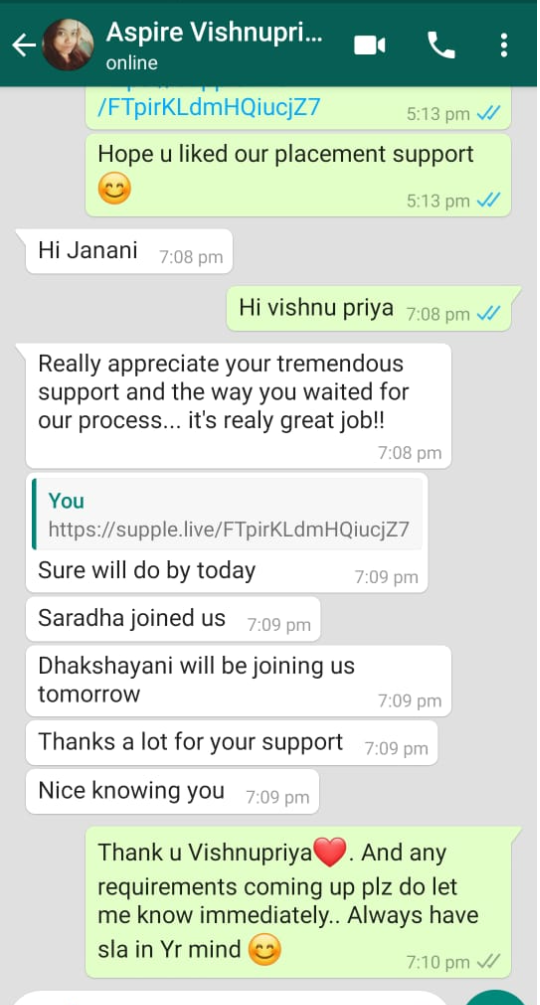
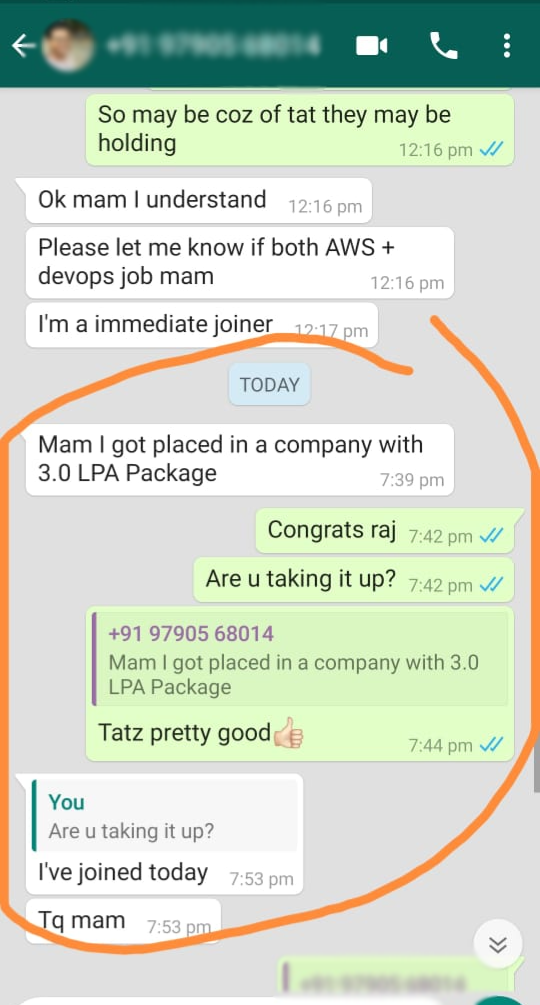
Appreciations through WhatsApp

Here are our recognitions from our students through whatsapp communication that add value to our training cum placement service

Top Recruiters

Enrolled Student Feedback

WHY CHOOSE US

Medical Coding Salary Comparison Data

FAQ'S

What if I miss a class?

You can cover from that Class Recording and ask doubt in Live Session.

What if I miss more classes due to some reason?

We will arrange backup classes for you or you can attend our next batch.

How much is the Course fee?

You can contact our team and we will get back to you with the course fee details.

What are the modes of Training?

We offer Online as well as Offline (Limited) with One-to-One or Batch.

What about live Projects?

We provide Live Projects during the Course in a Real Time Scenarios based practical manner.

Will I get a free demo?

Yes, we can schedule 1-2 free demo class.

Will you provide Class Recordings, Materials,Exercises, etc.?

Yes, we provide All Class Recordings, Materials, Notes, Exercises, etc.

Will I get a Course Completion Certificate?

Yes of course, Our Institute is Govt. registered and we give Course Completion Certificate.

What about the Trainer/Instructor?

Our Trainers/Instructors are having more and Well Experience in respective Course & IT Job Fields.

Why learn from Digital Hub Tech?

We provide in Deep Drive Advance Level Training to get multiple Job Offers with High Packages to settle the Long Career.

OUR COURSES

We Offer Various Courses. Here Are the Courses From Digital Hub Tech.

ETL

  • ETL TESTING
  • ETL DEVELOPMENT : IICS
  • ETL DEVELOPMENT : INFORMATICA POWER CENTER

Unix/Linux

  • UNIX SHELL SCRIPT
  • LINUX ADMIN

DevOps

  • AWS
  • AZURE

Database

  • SQL
  • PL/SQL
  • DBA
  • SEO
  • SMM
  • SEM
  • SMA

Cloud Data Engineer

  • AWS
  • GCP
  • AZURE
  • SNOWFLAKE
  • BIG DATA HADOOP
  • SPARK

Automation Testing

  • API
  • RPA
  • TOSCA
  • SELENIUM
  • PERFOMANCE

Full Stack Program

  • UI
  • JAVA
  • PYTHON
  • DOT NET

Scrum/Agile

  • SCRUM MASTER
  • AGILE COACH

Salesforce

  • ADMIN
  • DEVELOPMENT

Mulesoft

  • ADMIN
  • DEVELOPMENT

Servicenow

  • ADMIN
  • DEVELOPMENT

Programming Languages

  • C
  • C++
  • Data Structure

Software Testing

  • Manual Testing
  • Test Management Tool

SAS

  • ADMIN
  • DEVELOPMENT

BI Tools

  • POWER BI
  • TABLEAU

Medical Coding

Data Science

SAP

Blockchain

Cyber Security

Download Curriculum

Discover the comprehensive training offered at Digital Hub Tech by downloading our curriculum today.
×

Hello!

Click one of our contacts below to chat on WhatsApp

× Text Me